Field Note: Savu Sauna, Buckland Park Lake
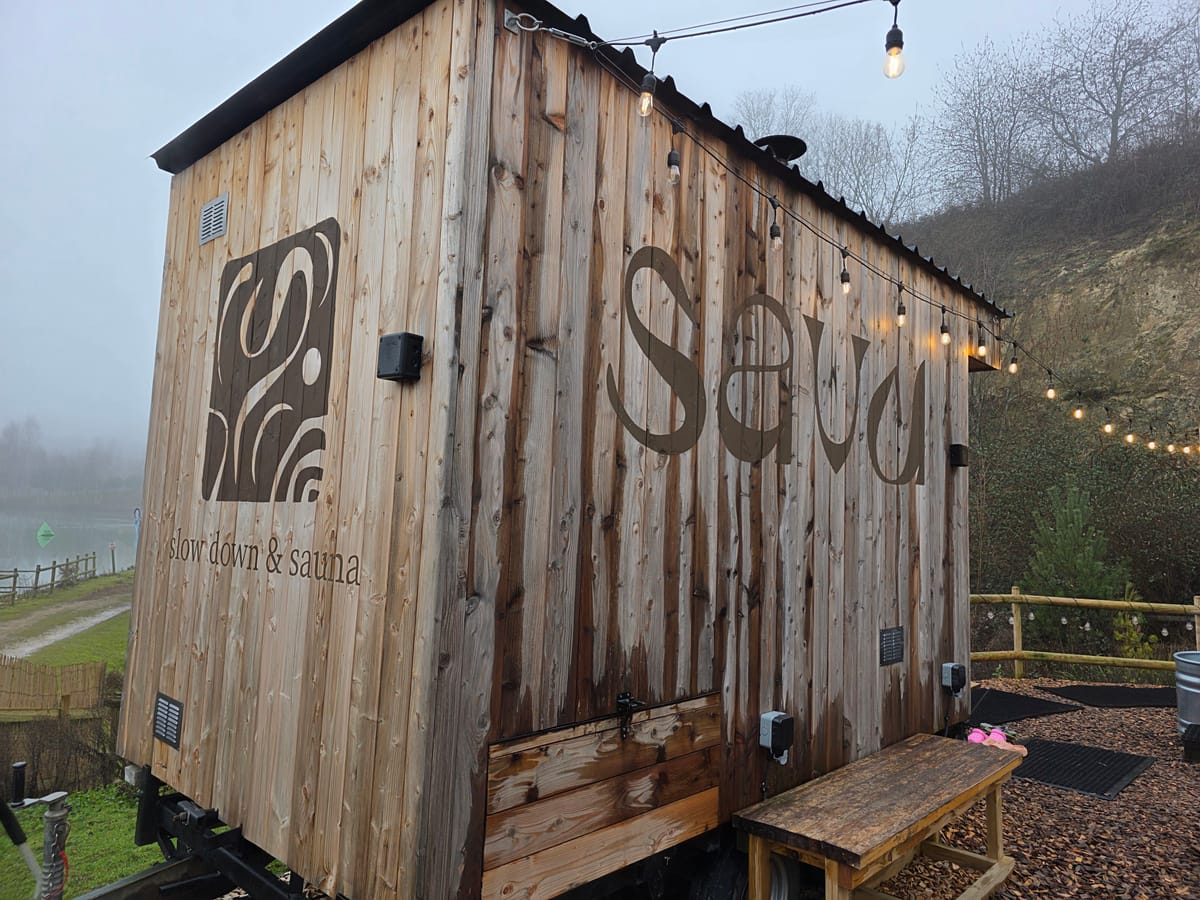
Savu Sauna, Buckland Park Lake (Surrey)
A beautiful setup whose winter constraint is heat retention (on our visit).
Savu is one of the most intentional-looking sauna setups we’ve visited in the UK: cedar, lighting, and a lake-facing window that turns a session into a proper outing. The cold area is clean and well run, and the host sets a high standard. The main limitation on our winter visit was mechanical rather than aesthetic: the sauna seemed to work hard to hold temperature, and without a true airlock/anteroom, door openings dropped the room quickly.
This note isn’t a “best sauna” judgement. It’s a record of what we experienced on a particular day, in particular conditions, and what it suggests about the design trade-offs at play.
Context
Season/Conditions: Cold winter day (exact outside temp not measured)
Session Type: Communal
Session Length: 45 minutes
Price: £18
Occupancy: 7, 1 too many for top bench space
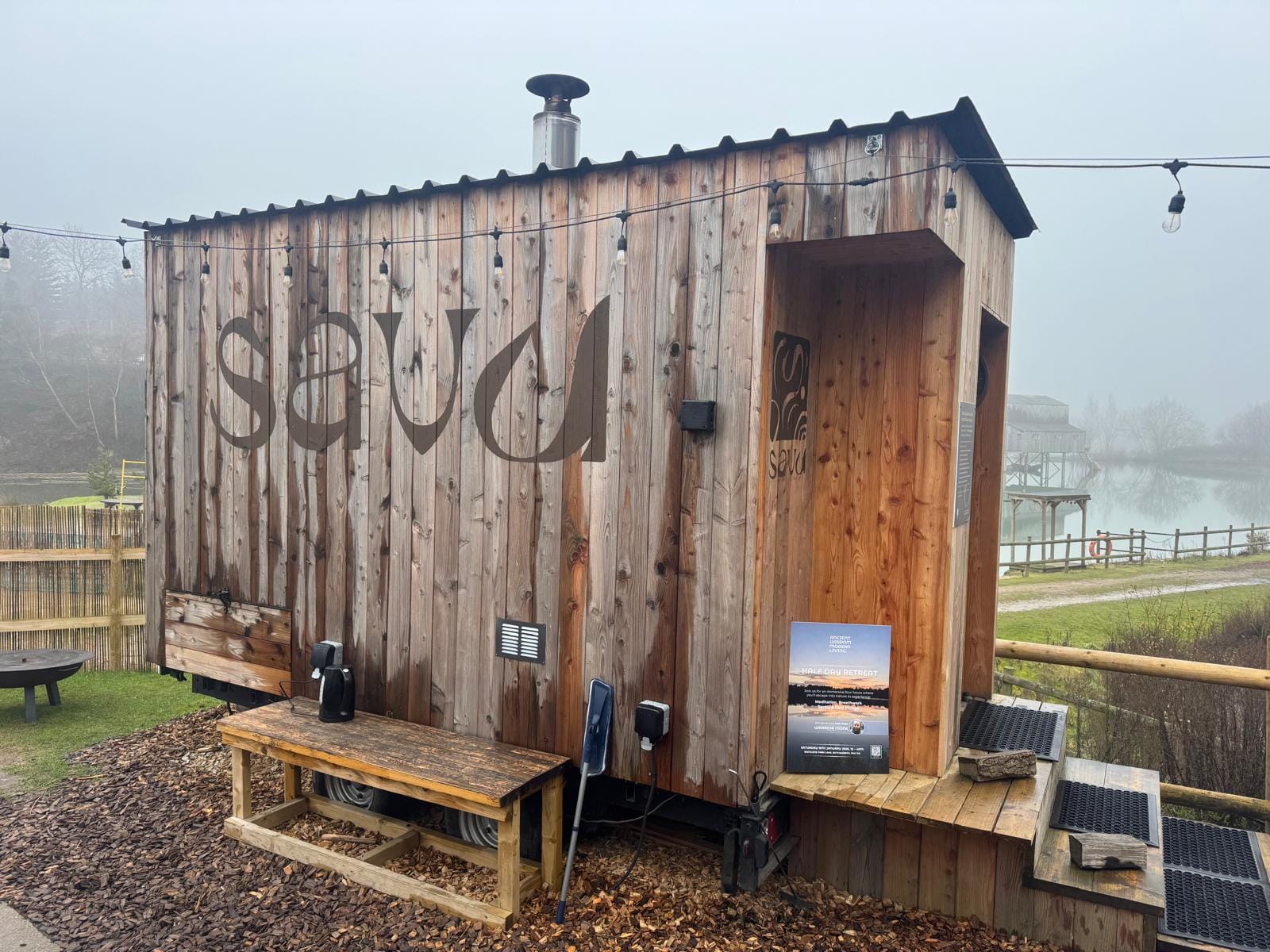
Heater: Iki wood-burning tower
Reported/observed temp: Around 80°C (we did not take a separate probe reading)
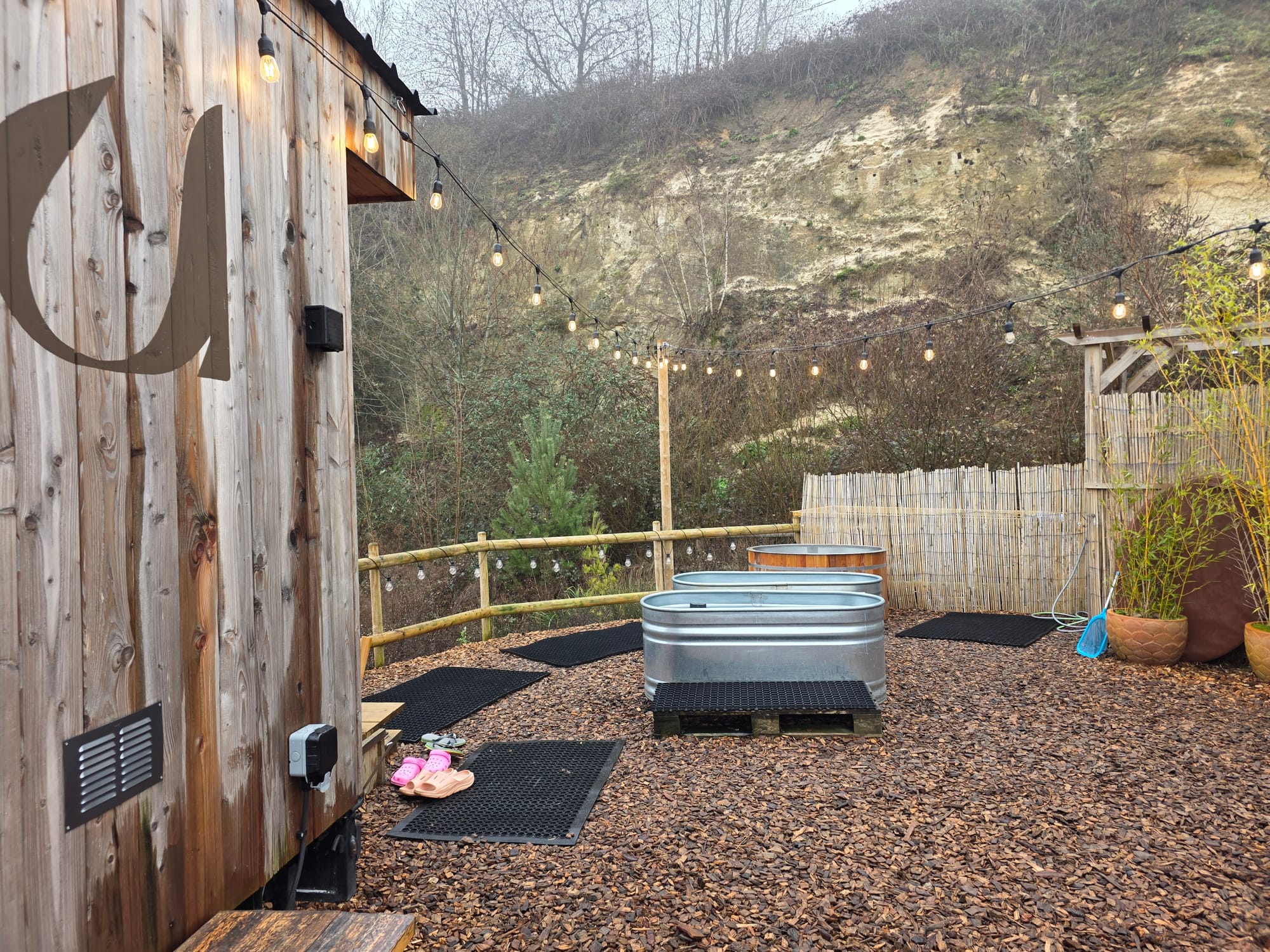
Cold: Three tubs; water felt sub-10°C (not measured). Shower before.
Facilities: Changing. Cold shower. Warm shower/toilets a decent walk away. No lockers.
Setting: Lakeside; restaurant on-site (The Reverie)

Arrival: setting and atmosphere
Buckland Park Lake gives Savu something most sites can’t manufacture: a calm horizon and a sense you’ve gone somewhere, even if you’ve only driven 30–60 minutes. On a foggy morning, the lake turns the session into an outing rather than a “wellness errand”.
The overall site layout feels cared for. The plunge area reads as hygienic, and the ground treatment matters more than people think in winter: bark and mats are kinder to bare feet than gravel, and that kindness compounds over a session.
Heat and steam: what it felt like (and what might explain it)
The stove is the right kind of equipment for a commercial cabin: a wood-fired Iki tower with enough stone mass, in theory, to give you that softer, heavier steam rather than sharp.
When water hit the stones, the löyly quality was the best part of the hot room: heavy, hugging, pleasant. So the core “steam signature” is there.
The constraint, on this visit, was temperature stability in winter. The room sat around ~80°C and felt like it was constantly fighting the weather, especially after the door opened. The host was upfront about it and actively tended the fire during the session, which helped — but it didn’t fully change the underlying dynamic.
A few possible contributors (these are hypotheses, not claims):
- Door losses: without a true airlock/anteroom, every opening is a direct exchange with cold air
- Operational load: the combination of outside temperature + user traffic can exceed what the system can recover from between openings
Air quality was genuinely good — fresh rather than stale — and the cedar smell was clean. The small touch of essential oils in the water made the experience feel considered (whether you personally like oils or not, it signals intent).
Room design: the “wow” and the practical limits
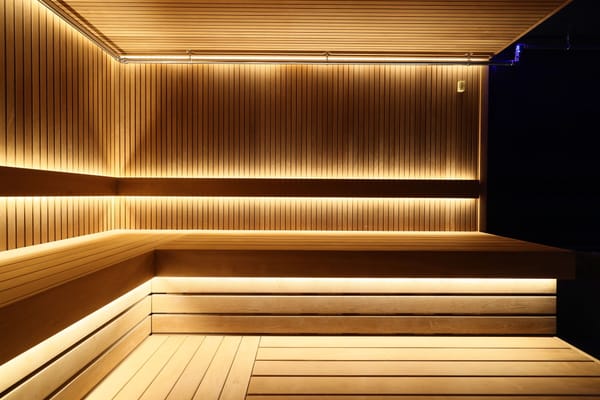
Visually, Savu is excellent. The cedar cladding, lighting, and grain read high quality, and the lake-facing window is a genuine asset. It’s the obvious “wow” factor, but it’s not just aesthetics — it changes how time feels in the room.
Two practical notes from our visit:
- Capacity reality: marketed as an 8-person sauna, but the top bench felt comfortable for ~5
- Height distribution: the best experience is on the top bench (the usual law of heat) — which becomes an issue when the room is busy
The window view fogged fairly quickly. That’s not a moral failure — it’s physics — but it does change the experience. Some operators solve this with airflow design; others solve it with a simple squeegee and a norm that it’s OK to use it.
There is a small entrance recess, which helps a bit, but it didn’t behave like a true airlock in winter: door openings still felt “expensive”.

Cold cycle: clean, simple, confidence-building
The plunge setup works. Three tubs, genuinely cold water, and importantly: clear hygiene culture (mandatory cold shower before entering). Water clarity builds trust instantly.
The transitions are short and sensible. In winter, that matters as much as water temperature. Underfoot surfaces were forgiving rather than punitive, which keeps people calmer and less rushed — and rushing is the enemy of a good contrast cycle.
The one tease is the lake itself: you’re right there, but swimming isn’t permitted under the park rules. It’s a frustration, though the tubs and the view do soften the blow.
Flow: time and changing
45 minutes is tight if you like a three-round cycle without clock-watching. It’s not “wrong”, but it nudges the session toward efficiency rather than spaciousness.
Changing created the main pinch point: two outdoor stalls meant a crunch at changeover, and standing still in winter is when people start to resent the clock. There are heated showers at the main hub, but they’re far enough away that they break the rhythm.
A small positive: The Reverie on-site is genuinely good. A great breakfast turns Savu into a morning out, not just a session.
The human element: hosting as experience design
The host lifted the whole session. He didn’t just sit outside: he tended the fire, checked in, managed etiquette, and kept the atmosphere friendly.
He enforced the important rules calmly:
- shower before plunging
- manage bench space so more people get time in the best heat
- keep things flowing without it feeling policed
The honesty about the temperature dynamic mattered. It builds trust. Small touches (orange slices mid-session) cost little and land well.
How it landed
This was one of those sessions where the setting does real work. Even with winter mechanics showing up, the views, the good clean cold cycle and great hosting made you feel cared for.
The main friction is that 45 minutes plus winter door losses nudges you into feeling a bit rushed.
Who this is for
If you want a proper “outing” sauna with a calm setting, strong hosting, and genuinely good löyly when it hits, you’ll love this.
If you want long, unhurried rounds with minimal temperature drop when the door opens (especially in deep winter), this may feel slightly constrained.
If I went again
I would go back — partly because the setting is special, and partly because the steam quality hints at what this room is capable of when conditions and mechanics align.
Next time, I’d want to observe/measure a few things to separate “winter day variance” from “systemic constraint”:
- head/foot temperature (probe), plus outside temperature and wind
- how fast the room recovers after door opens
- group size and how often the door opens
- where air enters/exits (vent positions) and whether steam is being pulled out fast
I’d also be curious how it behaves in shoulder season, and whether anything has changed since our visit.
Verdict: Beautiful and well run, but short sessions and heat losses to the downside.